
Supply & Manufacturing

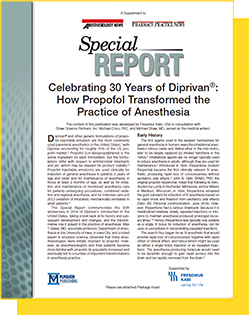
How Fresenius Kabi makes sure Diprivan is there for you.
Fresenius Kabi leadership: our ongoing investments have enabled us to meet U.S. propofol demand.
Fresenius Kabi’s response to the propofol drug shortages.
Fresenius Kabi increased Diprivan supply manufacturing product in multiple facilities to guard against any supply interruptions.
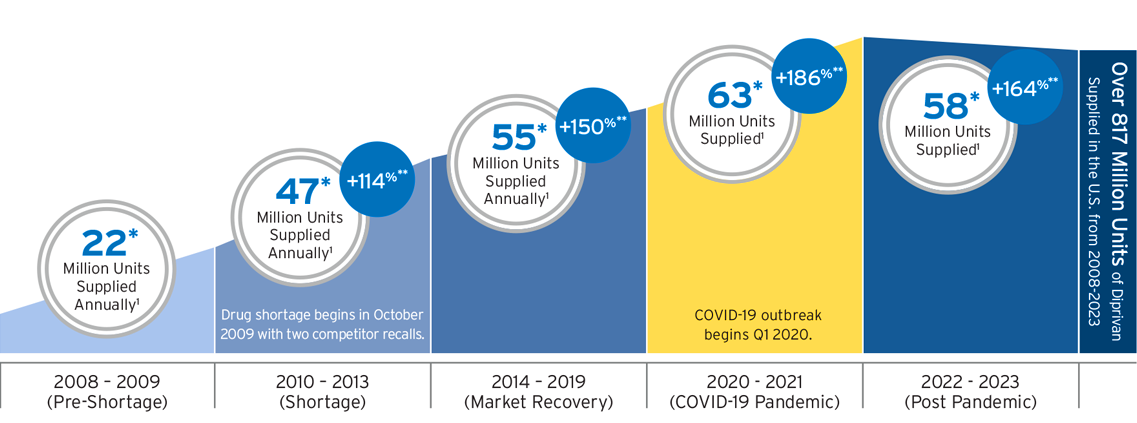
*Based on the average annual units supplied during the time frame shown.
**Based on the percentage increase over the 2008 — 2009 average.
REFERENCE
1. Data on file.
Important Safety Information
CONTRAINDICATIONS
DIPRIVAN is contraindicated in patients with Known hypersensitivity to propofol, egg or soybean.
WARNING AND PRECAUTIONS
Hypersensitivity Reactions: Serious and sometimes fatal reactions.
Microbial Contamination: Strict aseptic technique must be maintained during handling. DIPRIVAN vials are never to be accessed more than once or used on more than one person. Administration should commence promptly and be completed within 12 hours after the vial has been opened. Discard unused drug product. Do not use if contamination is suspected.
Cardiovascular depression: Cases of bradycardia, asystole, and cardiac arrest have been reported. Pediatric patients are susceptible to this effect, particularly when fentanyl is given concomitantly.
Read More
ADVERSE REACTIONS
The most common adverse reactions >1% were bradycardia, arrhythmia, tachycardia, hypotension, hypertension, decreased cardiac output, movement, apnea, respiratory acidosis during weaning, rash, pruritus, burning/stinging or pain at injection site, and hyperlipemia.
To report SUSPECTED ADVERSE REACTIONS, contact Fresenius Kabi USA at 1-800-551-7176 or FDA at 1-800-FDA-1088 or www.fda.gov/medwatch.
DRUG INTERACTIONS
Opioids, Sedatives or Other Analgesic Agents: May increase the anesthetic/ sedative and cardiorespiratory effects.
Valproate: May lead to increased blood levels of propofol.
INDICATIONS AND USAGE
DIPRIVAN is an intravenous general anesthetic and sedation drug indicated for:
- Induction of General Anesthesia for Patients Greater than or Equal to 3 Years of Age.
- Maintenance of General Anesthesia for Patients Greater than or Equal to 2 Months of Age.
- Initiation and Maintenance of Monitored Anesthesia Care (MAC) Sedation in Adult Patients.
- Sedation for Adult Patients in Combination with Regional Anesthesia.
- Intensive Care Unit (ICU) Sedation of Intubated, Mechanically Ventilated Adult Patients.
Limitations of Use:
- DIPRIVAN is not recommended for induction of anesthesia below the age of 3 years or for maintenance of anesthesia below the age of 2 months.
- MAC sedation in the pediatric population is not recommended. DIPRIVAN is not indicated for use in Pediatric ICU sedation.
This Important Safety Information does not include all the information needed to use DIPRIVAN® (Propofol), Injectable Emulsion, USP safely and effectively. Please see full prescribing information for DIPRIVAN® (Propofol), Injectable Emulsion, USP. Full prescribing information is also available at www.fresenius-kabi.com/us.